Your air filter may not be something you think about often—but it plays a huge role in your home’s comfort, air quality, and HVAC efficiency. When it gets dirty or clogged, it can cause all kinds of problems you might not immediately connect to your filter. Here’s how to spot the warning signs before they turn into bigger (and more expensive) issues.
Weak or Uneven Airflow
If some rooms feel stuffy or cooler than others, your filter might be restricting airflow. A dirty filter makes it harder for your HVAC system to push air through the vents, leading to poor circulation and longer run times.
Higher Energy Bills
When your system has to work harder to move air, it uses more electricity. If your energy bill keeps rising but your usage hasn’t changed, a clogged air filter could be the culprit.
More Dust Around the House
Noticing more dust settling on your furniture, vents, or countertops? When your filter is full, it can’t trap airborne particles effectively—allowing dust, pollen, and pet dander to recirculate throughout your home.
Unpleasant or Musty Smells
A dirty air filter can collect moisture and bacteria, which cause unpleasant odors every time your HVAC system turns on. Replacing your filter helps eliminate those musty smells and keeps your home’s air fresh.
Increased Allergy or Asthma Symptoms
If anyone in your household suddenly experiences more sneezing, coughing, or eye irritation, your air filter could be spreading irritants instead of trapping them. Clean filters mean cleaner, healthier air for your family.
HVAC System Running Constantly
A clogged air filter restricts airflow, forcing your system to run longer cycles to reach the desired temperature. This puts unnecessary strain on motors and components, leading to more wear and potential breakdowns.
How Often Should You Replace Your Air Filter?
For most homes, filters should be replaced every 1–3 months. If you have pets, allergies, or live in a dusty area, monthly replacements are ideal.
It’s a small maintenance step with big long-term benefits for your home comfort and your wallet.
Dirty HVAC Air Filter Frequently Asked Questions
Can a dirty air filter cause my AC not to cool?
Yes. When airflow is restricted, your system can’t pull in enough air to cool properly. This can cause warm air to blow from your vents or even freeze your evaporator coil.
How do I know if my air filter needs changing?
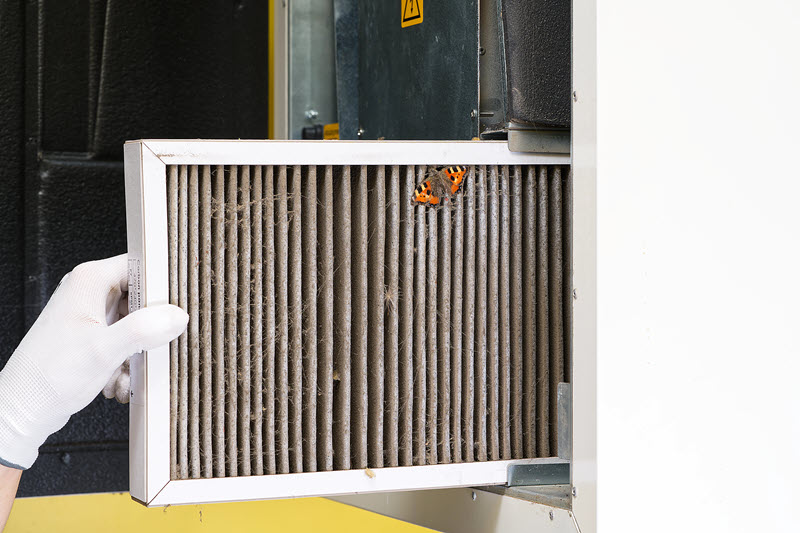
Remove the filter and hold it up to the light. If you can’t see light passing through or it looks gray and dusty, it’s time for a new one.
Can I clean and reuse my air filter?
Most disposable filters should be replaced, not cleaned. However, if you have a washable filter, follow the manufacturer’s cleaning instructions and make sure it’s completely dry before reinstalling.
What type of air filter should I use?
Look for the correct size listed on your current filter. J. Adams offers a variety of high-quality replacement filters designed to improve airflow and capture dust, pollen, and allergens effectively.